

How Oregon’s Ballot Measure Could Set a National Precedent Against Hunting
Political strategists and animal rights activists are watching the Pacific Northwest closely, viewing it not as an isolated battleground but as a "test kitchen" for radical policy. Oregon’s Initiative Petition 28 (IP28), also known as the PEACE Act, is being positioned as a pilot program for a nationwide agenda.
By targeting a state with a low barrier for ballot initiatives and a progressive voting base, proponents frame the campaign as a step toward a ‘no-kill’ society and argue it is politically viable. As noted by bioethicist Wesley J. Smith, Oregon is viewed as a jurisdiction where "anything deemed progressive is possible." If this experiment succeeds in dismantling the state’s wildlife management structure, it will provide a proof of concept that can be exported to other states, bypassing legislatures and overriding biological expertise across the country.
The "Suffrage Strategy": Normalizing the Unthinkable
The strategy behind the Oregon ballot measure is openly psychological. Campaign leadership has explicitly compared their efforts to the Women's Suffrage movement, noting that early defeats are part of the plan. Chief petitioner David Michelson has stated in interviews that the goal is to "force a vote" repeatedly. The logic is that even if the measure fails initially, the mere act of voting on a hunting ban "normalizes the conversation." Michelson argues that these campaigns plant "seeds" in the public consciousness that eventually take root.

By forcing voters to debate whether hunting constitutes "cruelty" rather than conservation, the petition shifts the "Overton Window"—the range of policies acceptable to the mainstream—drastically toward abolition. This strategy relies on attrition; they intend to return election after election until the public is worn down or the demographics shift enough to secure a victory.
The "Deletion" Template: A Legal Weapon for Any State
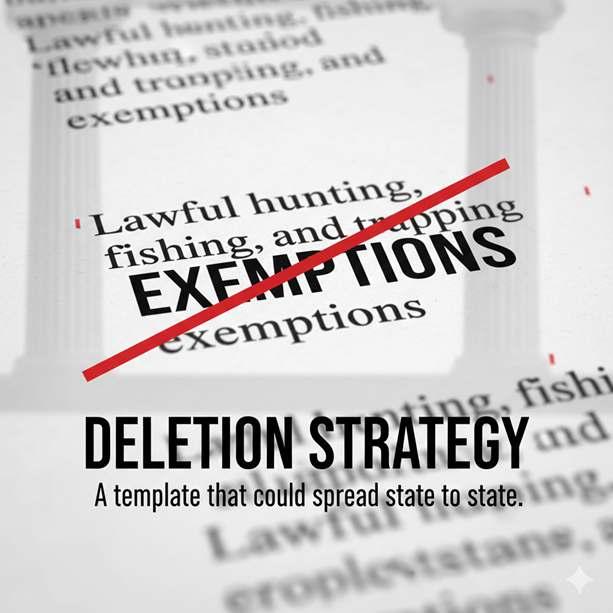
What makes the exemption-removal initiative particularly dangerous as a national precedent is its legal simplicity. Unlike complex regulatory bills that often span hundreds of pages, this measure operates by simply deleting a few lines of text from existing statutes.
Most states have animal cruelty laws that include necessary exemptions for standard agricultural practices, fishing, and hunting. This measure simply strikes those exemptions. Michelson has described the approach as "quite simple," noting that it removes the legal shield so that the protections for pets are extended to livestock and wildlife.
This "deletion template" is a turnkey legal weapon. If it survives legal challenges in Oregon, activists in states like Washington, Michigan, or Colorado could easily replicate it. They would not need to write new laws; they would only need to identify the specific exemption clauses in their state codes and run a campaign to delete them.
From "Confinement" to "Abolition": Escalating the Ballot War
The proposed animal-cruelty revision represents a significant escalation in the national animal rights movement’s tactics. For the last decade, ballot initiatives have largely focused on methods of confinement or specific species. For example, California’s Proposition 12 (2018) and Massachusetts’ Question 3 (2016) focused on cage sizes for farm animals.
This proposal abandons the regulatory approach in favor of total abolition. It does not seek to ban specific traps or increase cage sizes; it seeks to criminalize the "intentional killing" of animals entirely. Proponents have admitted that their goal is to shift society away from killing animals to meet human needs. This marks a pivot from "welfare" to "rights," creating a legal framework where a fish has the same right to life as a human, and harvesting one becomes a crime.
The "Import-Only" Trap
A critical component of this strategy is the creation of an economic trap that could force a nationwide ban. The hunting-and-fishing restriction proposal focuses on criminalizing the act of killing within Oregon’s borders. However, proponents clarify that the measure does not immediately ban the sale of meat, leather, or fur.
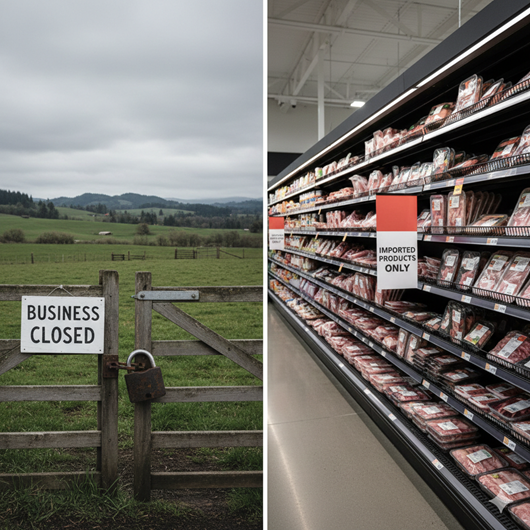
This creates a structural hypocrisy: Oregon would become a "sanctuary state" where production is illegal, but consumption continues. Meat sold in grocery stores would have to be imported from other states. Proponents have admitted this is intentional. Once they have successfully shut down production in one state, they intend to "bring similar initiatives to every state until the killing of animals is against the law nationwide." The goal is to create a domino effect where production is chased from state to state until it is outlawed everywhere.
The "30-Day" Shock Doctrine
Another precedent-setting aspect of the measure is its urgency. Legislative bills involving major economic shifts typically include multi-year phase-in periods to allow industries to adapt. In contrast, the petition is designed to take effect just 30 days after the election. Proponents have stated that they view the issue as urgent and constitutionally seek the minimum implementation window. This "shock doctrine" approach is designed to dismantle the user-pays conservation infrastructure immediately. If the state cannot authorize hunting or sell licenses just one month after the election, the funding mechanism for wildlife conservation collapses before opposition groups or the legislature can effectively reorganize or challenge the implementation.

Hold the Line in the West
The battle over the Oregon ballot measure is not a local dispute; it is a national referendum on the future of the North American model of conservation. Stopping this measure in Oregon denies activists the "proof of concept" they need to attract national funding for similar campaigns in your state.
We must recognize that this is a coordinated, long-term strategy to end our way of life. Stand with Oregon hunters today. Join the Hunter Nation Foundation in opposing this radical overreach and help us ensure that this dangerous legal template does not spread across the country.