

How the License Counter Can Mobilize Pennsylvania’s Missing Hunters
In Pennsylvania, a state where elections are frequently decided by razor-thin margins, there is a massive group of citizens who are currently sitting on the sidelines. They are not silent because they lack opinions, nor are they disengaged because they don’t care about the future of their state. They are silent simply because they are not on the voter rolls.
Approximately 515,000 gun owners and hunters in Pennsylvania are not registered to vote. To put that in perspective, that number is larger than the entire population of many Pennsylvania counties. It represents nearly 30% of the state’s hunting community. This isn't just a small gap in the system; it is a gaping hole in the state's civic foundation. When nearly one in three hunters is missing from the electorate, the specific interests of the outdoor community—from land management to wildlife conservation—risk being ignored by policymakers.
Why Are So Many Hunters Missing?
The question inevitably arises: why is this specific group so underrepresented? The answer is rarely apathy. Instead, the problem stems from a combination of logistical barriers, timing conflicts, and the unique lifestyle of the Pennsylvania sportsman.
First, consider the calendar. Election Day in November lands directly in the heart of the hunting season. For many dedicated outdoorsmen and women, early November is the time to be in a tree stand, at a deer camp, or completely off the grid, not standing in line at a polling place. If a hunter isn't registered well in advance, the window closes while they are focused on the rut.
Furthermore, a significant portion of this demographic lives in rural areas. In these communities, government services are not always just around the corner. A trip to the county courthouse or a voter registration office can be a time-consuming trek. When you combine the rural geography with the demanding work schedules of many blue-collar hunters, the extra effort required to register often falls by the wayside. It is a classic case of friction: the harder a process is, the fewer people will do it.
The "Trusted Touchpoint" Solution
The solution to this problem does not require millions of dollars in ad campaigns or complicated new government bureaus. It simply requires meeting hunters where they already are.
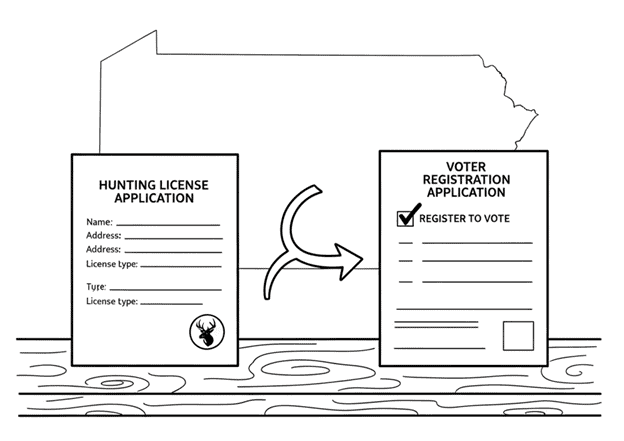
For hundreds of thousands of Pennsylvanians, the act of buying a hunting or fishing license is their one consistent, annual interaction with the state government. Every year, they engage with the system to ensure they are legal to head into the woods or out on the water. This transaction is what Hunter Nation Director of Policy Daniel M. Sneath calls a "trusted touchpoint." It is a familiar, routine moment where the hunter is already thinking about their rights, their access to land, and their role in the state’s ecosystem.
"Applying for a hunting or fishing license may be the most consistent interaction many sportsmen have with state government. By making voter registration applications available during that process, we can encourage greater civic participation from people who care deeply about our land, wildlife, and more."
— David Rowe, State Representative and Chairman of the House Republican Policy Committee
By integrating voter registration into this existing transaction, the state removes the friction. The hunter is already providing their name, address, and residency information to buy the license. Checking a box to register to vote becomes a seamless part of that 10-minute task, rather than a separate chore that requires a different trip on a different day.
A Proven Strategy Across the Nation
Pennsylvania is not the first state to realize the potential of the license counter. The model has already been road-tested and proven effective in several other states with strong outdoor traditions.
Georgia and Virginia have successfully implemented laws that integrate voter registration with license applications. In these states, the "Motor-Voter" concept—where you register at the DMV—was simply expanded to include wildlife agencies. Arizona joined them in 2021, passing legislation that instructed their Game and Fish Department to add voter registration options to their forms. Florida has similar statutes in place, ensuring that wherever licenses are sold, voter applications are displayed and available.
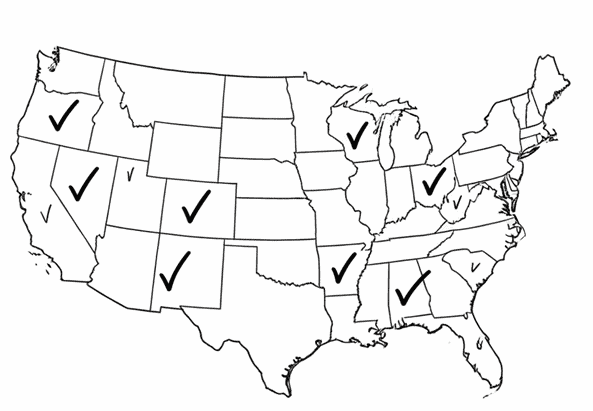
The momentum is growing elsewhere, too. Just this year, North Carolina began moving similar legislation through its House and Senate, addressing National Shooting Sports Foundation data showing that 370,000 hunters in that state remain unregistered. These states recognized that hunters are reliable, law-abiding citizens who are already participating in a state-regulated activity. Helping them vote was a logical next step.
Mobilizing the Sleeping Giant
The potential impact of fixing this gap in Pennsylvania cannot be overstated. We are talking about mobilizing a bloc of voters that is half a million strong. These are citizens who pay for conservation through license fees and excise taxes. They are the stewards of the land and the primary stakeholders in Second Amendment issues.
Currently, their political influence is diluted because they are under-registered. By turning the license counter into a gateway for civic engagement, Pennsylvania can wake this sleeping giant. It transforms a routine purchase into an act of empowerment, ensuring that the people who contribute the most to the Commonwealth’s natural resources finally have a proportional say in how they are governed. The license counter is no longer just about permission to hunt; it is about securing the right to be heard.