

Deconstructing the Wisconsin DNR’s 2023 Wolf Management Plan
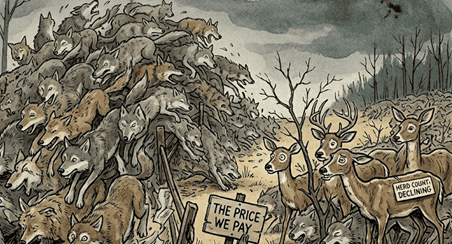
Let's cut to the chase: the Wisconsin Department of Natural Resources (DNR) has abandoned science-based wildlife management. They've tossed out the proven 1999 wolf plan, which kept the population in check with a clear, common-sense 350-wolf cap.
In its place, they’ve given us the 2023 "Wolf Management Plan"—a classic government bait-and-switch. This new plan scraps the hard population cap for a vague "adaptive management" framework, designed from the start to avoid accountability and hide behind bureaucratic doublespeak.
They're no longer managing wolves with a firm number; they're "recommending" a population of up to 1,200 wolves or more, giving the agency and anti-hunting activists free rein to let predator populations explode while our deer herds pay the price. This isn't a "compromise"; it's a direct threat to our hunting heritage.
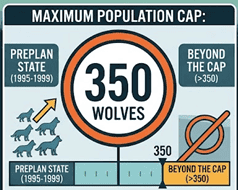
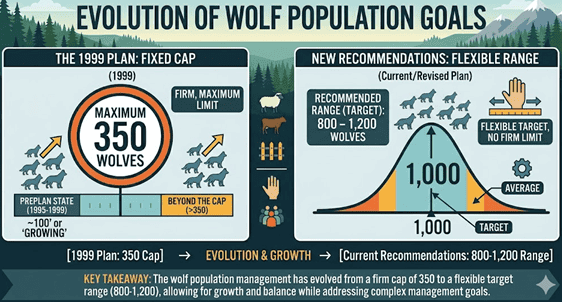
The approved the 2023 Wolf Management Plan in October 2023, replacing the 1999 plan. The most significant change is the removal of a hard population cap. The 1999 plan capped the wolf population at 350, while the new plan implements a more flexible "adaptive management" framework.
This new framework recommends a statewide population of around 1,000 wolves, with a range of 800 to 1,200, but does not set a firm limit. Instead, it uses population thresholds to determine whether the population should grow or be reduced.
This change has been met with criticism from hunters and farmers who want a specific, statewide population goal. In response to this, Republican lawmakers advanced a bill to require the DNR to include a specific number in the plan.
The DNR, however, has defended the new plan as a "scientifically sound compromise" that allows for more flexibility in managing local wolf packs.
The Role of "Social Science"
This is what happens when wildlife management stops being about wildlife. Instead of relying on real field data, population numbers, and proven conservation practices, the 2023 plan shifts toward “stakeholder preferences” and competing social pressures. That means decisions are no longer driven purely by science, but by who is loudest and most organized.
Hunters and farmers are the ones who live with the consequences. They manage the land, fund conservation through licenses and taxes, and understand what healthy wildlife populations actually look like. On the other side, activist groups often push policies based on ideology rather than hands-on experience in the field.
Calling it “human dimensions” sounds reasonable on paper, but in practice it creates a system where science gets diluted by politics. Wildlife management works when it is grounded in data, accountability, and real-world outcomes. When it turns into a balancing act between competing social agendas, the mission shifts away from conservation and toward compromise.
The Wolf Advisory Committee: A "Stacked Deck"?
The Wisconsin Wolf Advisory Committee is a 24-member group that provides input and recommendations to the DNR on wolf management. The committee includes DNR staff, representatives from government agencies and tribal nations, and ten seats for stakeholder groups.
These stakeholder categories are:
- Hunting and Trapping
- Agricultural and Ranching
- Environmental
- Conservation Science and Education
- At-Large
Concerns have been raised about the committee's composition. Some members of the Wisconsin Conservation Congress have questioned the absence of the Wisconsin Trappers' Association and noted that several committee members reside outside of the wolf's primary range.
Federal Solutions: The PALS Act
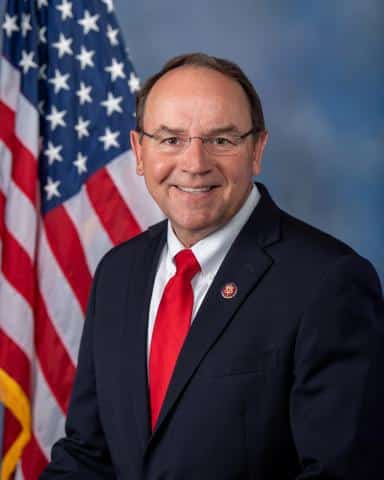
At the federal level, the Pet and Livestock Safety (PALS) Act (H.R. 845), introduced by Congressman Tiffany, aims to return management of the gray wolf to the states. The bill would require the Secretary of the Interior to reissue the 2020 rule that removed Endangered Species Act (ESA) protections for the gray wolf in 45 states. A key provision of the PALS Act is that it would prevent judicial review of the delisting, which would prevent lawsuits from halting state-led management plans. The bill has passed the House of Representatives, and the White House has issued a statement of support.
Summary
The Wisconsin DNR's 2023 Wolf Management Plan abandons the clear, numeric population target of the past in favor of a vague "adaptive management" framework that prioritizes agency discretion over accountability.
This new plan elevates "social science" from urban areas over the biological realities faced by rural communities and relies on a Wolf Advisory Committee that heavily favors government insiders and anti-hunting groups while minimizing the voices of hunters, trappers, and farmers.
With state-level legislative fixes being blocked by executive vetoes, the most promising path forward is the federal PALS Act, which would restore state control over wolf management and protect it from judicial activism.
The future of science-based wildlife conservation is now being decided at the ballot box and in public meetings, not in the field. To protect our outdoor heritage, every hunter must become an active advocate.
- Vote in Every Election: From local school boards to the governor's office, every elected official has the power to influence conservation policy. Your vote is the first line of defense.
- Make Your Voice Heard: Attend the April Natural Resources Board (NRB) Meeting and participate in public testimony. The administrative state counts on your silence; show them you are paying attention.
- Stay Informed and Engaged: Visit HunterNation.org to track key legislation and get the resources you need to effectively challenge anti-hunting regulations.
We must act now to ensure that the North American Model of Wildlife Conservation, which has been the most successful in history, is not dismantled by political agendas.