

Oklahoma HB 3270: What the Bill Proposed—and Where It Stands Now
A bill that would have significantly changed how Oklahoma manages farmed and wild deer populations has stalled in the state legislature.
Oklahoma House Bill 3270 (HB 3270), which focused on addressing Chronic Wasting Disease (CWD) through genetic research and regulatory changes, failed in the Senate Agriculture and Wildlife Committee. As of now, the bill is widely considered unlikely to advance further this session.
While the legislation may not move forward, it introduced ideas and policy changes that are worth understanding.
What Was HB 3270 Designed to Do?
HB 3270 proposed a new framework for managing cervidae (deer and related species) in Oklahoma, with a focus on combating Chronic Wasting Disease.
The bill centered on two main concepts:
- Using genetic selection to improve resistance to CWD
- Restructuring regulatory authority over farmed deer operations
The Chronic Wasting Disease Genetic Improvement Act
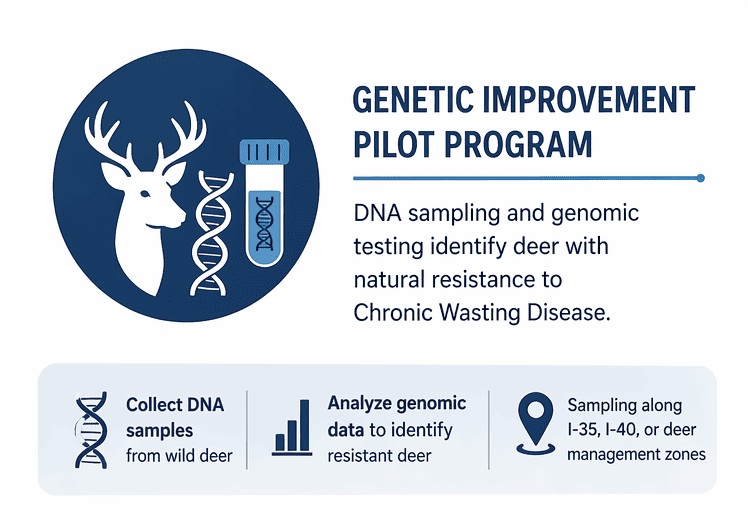
A key component of the bill was the creation of a Chronic Wasting Disease Genetic Improvement Act.
This would have established a pilot program aimed at identifying and breeding deer with natural resistance to CWD.
Key elements included:
- DNA sampling of wild deer populations to establish baseline genetic markers
- Identification of deer with traits linked to disease resistance
- Use of genomic breeding values to guide breeding decisions
- Sampling locations based on:
- Major interstates (I-35 and I-40), or
- Existing deer management zones
Participation would have been limited to native Oklahoma-born white-tailed deer meeting specific genetic criteria.
Release of Genetically Selected Deer
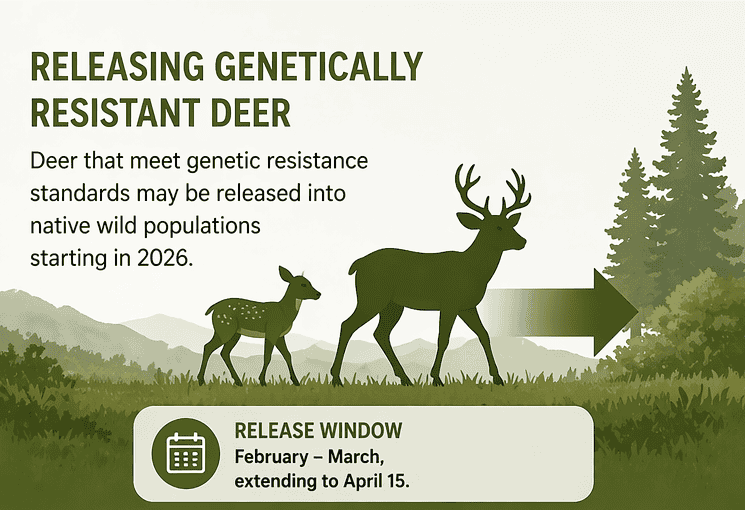
The bill proposed a notable change beginning in 2026:
- Deer bred to meet genetic resistance standards could be released into native wild populations
- Releases would be limited to a defined seasonal window:
- February through March
- Extending to April 15
This provision would have created a new pathway for interaction between farmed and wild deer populations.
Changes to Current Law on Deer Management
Under existing Oklahoma law, commingling of farmed and wild deer is generally prohibited.
HB 3270 included an exception:
- Deer meeting the genetic improvement standards could be integrated into native populations
This exception was tied specifically to the goals of the CWD genetic improvement program.
Shift in Regulatory Authority
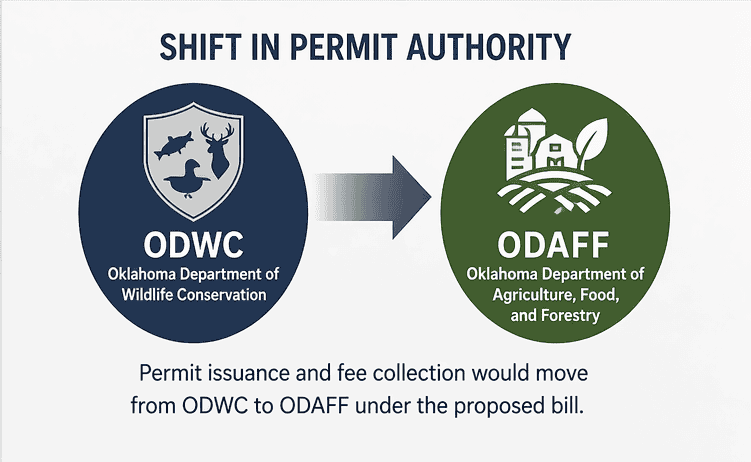
Another significant aspect of the bill involved which agency oversees farmed cervidae operations.
Proposed change:
Transfer of permit authority from the Oklahoma Department of Wildlife Conservation (ODWC) to the Oklahoma Department of Agriculture, Food, and Forestry (ODAFF)
Both agencies would still have had roles in:
- Rulemaking
- Program implementation
Permit Fees and Participation
The bill also addressed participation costs:
- A one-time permit fee, capped at $500, would apply
- The fee would be required for individuals purchasing deer under the pilot program
Rulemaking and Implementation
HB 3270 would have authorized both ODWC and ODAFF to:
- Develop and implement rules necessary to carry out the program
- Oversee compliance, testing, and release standards
The bill also included an emergency clause, meaning it would have taken effect immediately upon passage.
Current Status of the Bill
As of now:
- HB 3270 has failed in the Senate Agriculture and Wildlife Committee
- The bill is unlikely to move forward during the current legislative session
While this effectively halts the proposal for now, similar ideas could reappear in future legislation.
Additional Context
The Oklahoma Department of Wildlife Conservation (ODWC) has publicly shared information and its perspective on the legislation. For those interested in further details, you can review their page here:
Final Thoughts
Although HB 3270 is not expected to advance this session, it highlights ongoing discussions around:
- Chronic Wasting Disease management
- The role of genetics in wildlife health
- Oversight of farmed cervidae operations
Understanding the bill provides useful context for future policy conversations surrounding deer management in Oklahoma.