

Oregon Ballot Measure Could Criminalize More Than Hunting — Here’s Who Else Gets Hit
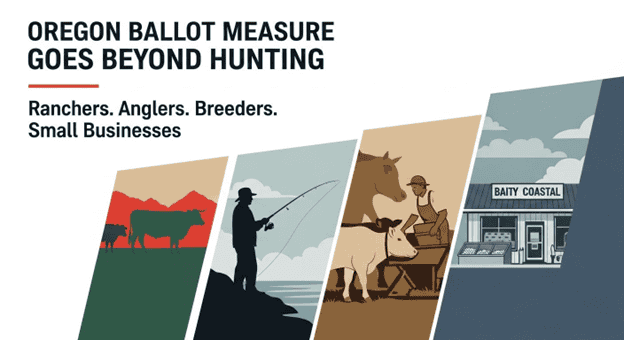
While often discussed as a ban on hunting, Oregon’s IP28 ballot measure (the PEACE Act) proposes a legal overhaul that extends far beyond the woods. A close reading of the initiative text reveals that the target list includes farms, rivers, classrooms, and private homes.
This animal‑rights initiative petition operates by deleting specific legal exemptions currently found in Oregon’s animal cruelty statutes. By systematically stripping away protections for "good animal husbandry," "lawful fishing," and "pest control," the measure puts ranchers, anglers, dog breeders, and small business owners in legal jeopardy.
Ranching and Animal Agriculture Under Fire
For generations, Oregon ranchers have operated under statutes that protect standard agricultural practices. Currently, state law explicitly exempts "good animal husbandry" from animal abuse charges. This protects necessary tasks—such as branding, dehorning, and castration—that are standard for herd health and safety.
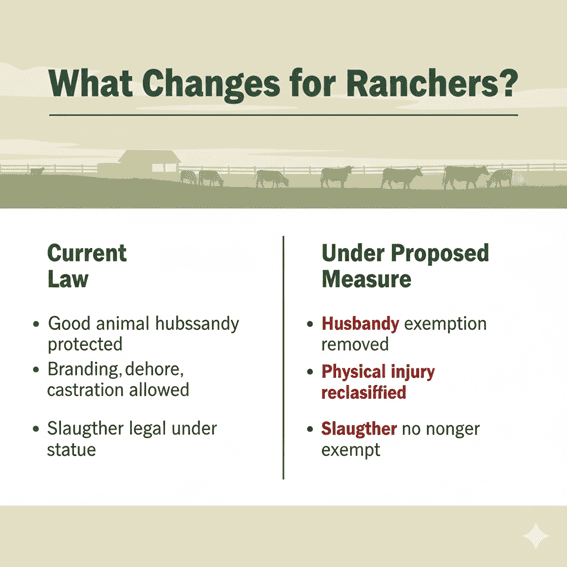
The text of this proposed ballot measure removes that exemption entirely. Because the initiative leaves the definition of "animal abuse" as causing "physical injury," standard livestock management could legally constitute a crime. Furthermore, because the slaughter of livestock involves causing death, the processing of animals for food would no longer be protected by law.
Proponents of the measure have argued in interviews that the goal is to force a transition away from killing animals for food. This change applies to all owners, meaning family farms and commercial operations alike could face misdemeanor or felony charges for carrying out the daily work of feeding Oregonians.
Breeding Practices Labeled ‘Sexual Assault’ in the Text
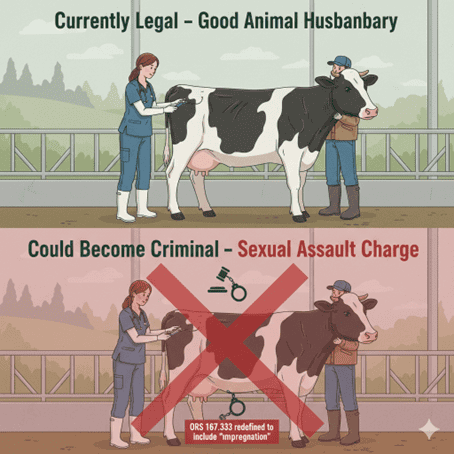
Perhaps the most radical change proposed by this proposed ballot measure is found in the amendment to Oregon Revised Statute 167.333. The initiative redefines the crime of "Sexual Assault of an Animal" to include touching sexual organs for the purpose of "impregnation".
This language targets artificial insemination (AI), a critical tool used by farmers and breeders to ensure genetic diversity, herd health, and safety. Under the proposed law, a dairy farmer or a professional dog breeder utilizing AI could potentially be charged with a sex crime.
Critics, including the Oregon Farm Bureau, have noted that this provision would effectively outlaw the business models of reputable breeders and livestock producers across the state. By criminalizing the reproductive technologies that modern agriculture relies on, the measure threatens to dismantle the state's ability to produce its own meat and dairy.
Anglers, Guides, and Coastal Communities
While the measure is often discussed as a hunting ban, its impact on Oregon’s fishing heritage is equally severe. The initiative removes the statutory exemption for "lawful fishing," removing the explicit legal carve-out that currently protects lawful fishing.
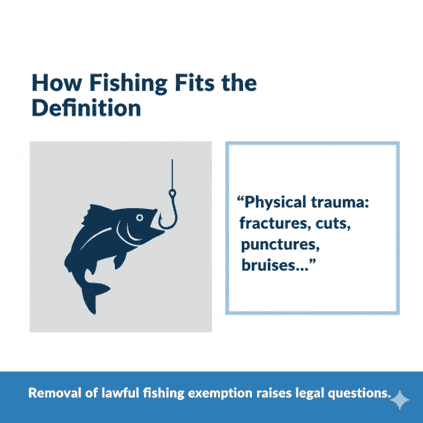
The proposed text defines "physical trauma" to include "fractures, cuts, punctures, bruises, burns or other wounds". Consequently, the act of hooking a fish—even during catch-and-release fishing—would cause a "puncture" or "cut," fitting the legal definition of abuse.
This change puts anglers and fishing guides in a precarious position. Charter boat operators on the coast and river guides in the interior would see their livelihoods threatened. If the act of catching a fish is criminalized, the tourism dollars that sustain many of Oregon’s coastal and riverfront towns would likely vanish.
Targeting Youth and Everyday Homeowners
The legal changes proposed by Oregon’s IP28 hunting‑ban ballot measure would also disrupt educational traditions. Youth programs such as 4-H (Head, Heart, Hands, and Health) agricultural clubs and FFA (Future Farmers of America) rely on the ability of students to raise, handle, and market animals. If standard husbandry and slaughter are criminalized, these programs could effectively be outlawed, ending a vital pathway for agricultural education.
Furthermore, the measure deletes the exemption for "reasonable activities undertaken in connection with the control of vermin or pests". This removal implies that a homeowner setting a mousetrap in a pantry, or a farmer controlling gophers in a field, could be prosecuted for animal cruelty. The initiative makes no distinction between a pet cat and a pest rodent; intentionally killing either would be a crime.
The Economic Ripple Effect
The economic consequences of this measure would be felt by every Oregonian, not just those who work directly with animals. Rural businesses—from feed stores and tackle shops to restaurants serving local beef—depend on the agricultural and outdoor recreation economies. If local meat production and fishing seasons are shuttered, these small businesses would face devastating losses, and consumers would be forced to rely entirely on imported protein.
Conservation funding is also at risk. The Oregon Department of Fish and Wildlife (ODFW) relies on a "user-pays" model, where license sales and excise taxes from hunters and anglers fund approximately 55% of the agency’s budget. If hunting and fishing are banned, this revenue stream would evaporate, crippling the state's ability to manage wildlife populations and habitat.
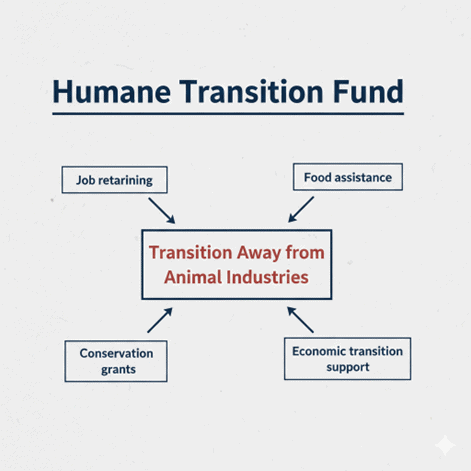
The initiative’s proponents anticipate this economic collapse. The text of the measure establishes a "Humane Transition Fund," which they admit is designed to provide job retraining and food assistance for workers displaced by the ban. This inclusion serves as a tacit admission that the measure would destroy industries and jobs, from slaughterhouse workers to fishing guides, requiring a massive government safety net to manage the fallout.
What This Means for Oregon’s Way of Life
It is clear that Oregon’s IP28 hunting‑ban ballot measure is an attack on the entire rural lifestyle, not just a modification of hunting regulations. Whether you are a rancher, a small business owner, a parent involved in 4-H, or simply an Oregonian who values local food, this measure poses a direct threat to your community.
We urge all concerned citizens to recognize the scope of this proposal. Join the Hunter Nation Foundation today to support the opposition effort and help protect Oregon’s heritage from this extreme legal overhaul.