

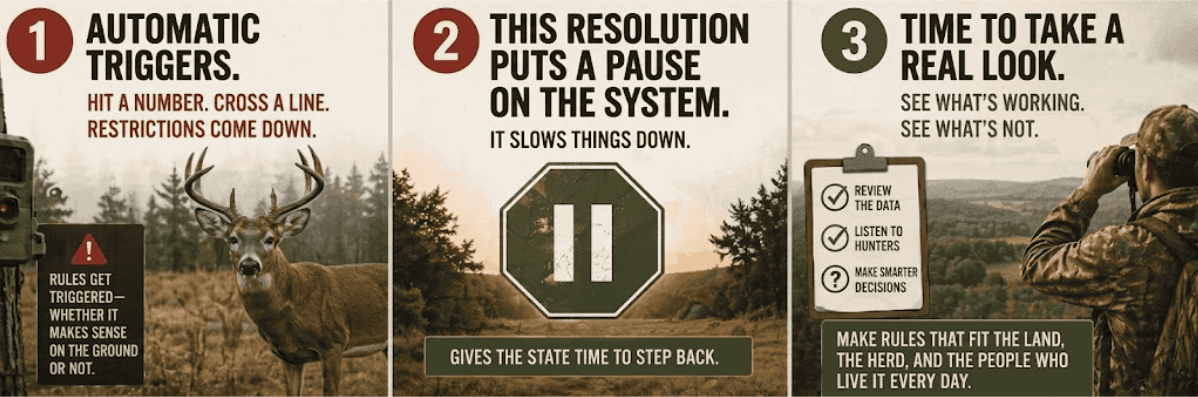
Right now, a lot of this system runs on automatic triggers. Hit a number, cross a line, and restrictions come down whether it makes sense on the ground or not. What this resolution does is slow that whole thing down. It puts a pause on those rules and gives the state a chance to step back and take a real look at what is working and what is not.
For hunters, that matters. It means there is finally some room to bring common sense back into it and make sure the way deer are managed actually fits the land, the herd, and the people who deal with it every day.
What the McCormick Resolution Does
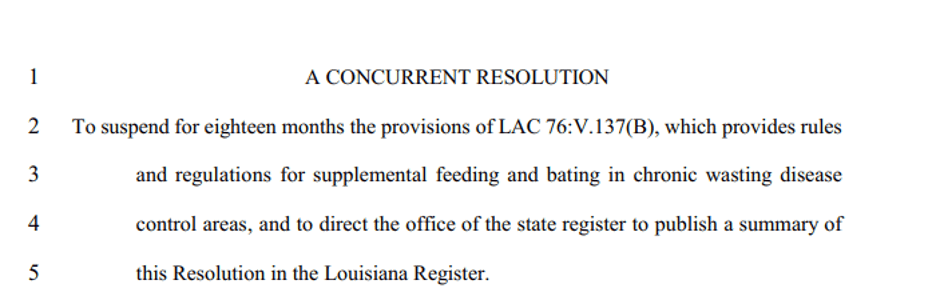
The McCormick CWD Resolution focuses on temporarily suspending the feeding and baiting restrictions that have been imposed within designated CWD control zones. These restrictions have become central to the state’s current response strategy, but they are also among the most debated tools in the field.
The resolution does not dismiss the presence of CWD. Instead, it challenges whether current mitigation efforts are proportionate, effective, and sustainable over time. By creating an 18-month window, the legislation opens the door for further study, stakeholder input, and a reassessment of policies that have been implemented rapidly and expanded broadly.
What Hunters and Leaders Are Saying
The push behind HCR 4 is not coming from one place. It is coming from lawmakers, advocates, and hunters themselves, all saying the same thing in different ways.
Representative Danny McCormick has been direct about why this resolution matters, calling for action and framing it as a response to overreach: “STOP THE OVERREGULATION. SUPPORT HCR 4.” As the resolution moved out of committee, he made it clear this is about momentum, adding, “Now we need your voice to get it across the House floor.”

He also tied the issue to broader concerns many hunters share, pointing to what he described as a disconnect between policy and reality: “With only 50 cases across just 4 parishes… the ‘science’ doesn’t justify the bans on our hunting traditions.” That argument has resonated across the state, especially among hunters who feel the current system is being driven more by thresholds than by conditions on the ground.
At the same time, Hunter Nation leadership is pushing for engagement, not disengagement. Rock Bordelon put it plainly in a message to hunters:
“Y’all please help us help you. Call your local legislators to vote for HCR4… our voice is huge and will help keep our heritage alive.”
That message reinforces a central theme of this effort, that results only happen when hunters stay involved.
Even at the policy level, the messaging has stayed focused on impact beyond just deer management. McCormick pointed to practical effects that go beyond CWD alone, noting the resolution “protects small family farmers” and “helps control the wild hog crisis,” tying the legislation to broader land management concerns across Louisiana.
The Context: A System Built on Triggers
To understand why this resolution matters, you have to look at how the current system is set up. Under SCR 24, wildlife management is tied to strict surveillance requirements. Each zone has to hit about 300 samples a year and stay under certain disease levels to avoid restrictions. If those numbers are not met, or if the rate crosses that line, baiting and feeding are shut down and stay that way until the targets are reached again.
That is where things get tight.
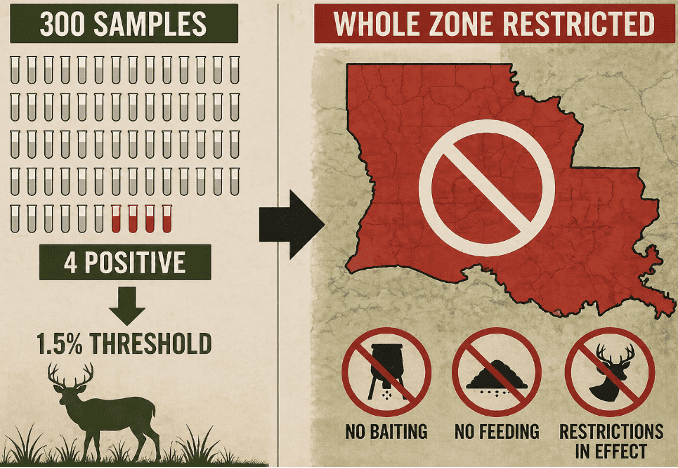
It does not take much to trigger it. With only around 300 samples, just a few positive cases can push a zone past that threshold and put the whole area under restriction. What looks like a small change on paper can turn into a big shift in how hunters are allowed to operate across an entire region.
Why This Advancement Matters
The advancement of HCR 4 is a direct response to what hunters and landowners have been saying. Right now, the system leans too much on numbers and not enough on what is actually happening out in the woods. Deer do not move based on charts. They move based on land, food, and pressure, and that does not always show up in a fixed set of rules.
The whole system also depends on hunters turning in samples. But when more restrictions get put in place, fewer people take part. When fewer people take part, it gets harder to meet the numbers. And when that happens, the restrictions stay longer.
That is the cycle. What this resolution does is put a pause on that. It gives the state time to step back, look at what is working, and fix what is not before pushing forward again.
Hunter Nation’s Role in the Process
Hunter Nation has not been sitting on the sidelines through this. From the start, the focus has been on getting hunters involved, not just reacting after decisions are already made. Through outreach, testimony, and direct advocacy, Hunter Nation has been pushing one clear message: hunters are not outside of conservation, they are the ones driving it.
In its own coverage of CWD and EHD concerns, Hunter Nation has consistently pointed back to what hunters are seeing in the field and why that matters for policy decisions. The organization has also warned that systems like SCR 24 put too much pressure on rigid rules and not enough on real-world input, calling on hunters to speak up before those rules get locked in.
The Strategic Contrast
Instead of policies being handed down, Hunter Nation is pushing for a system where hunters, landowners, and the people actually managing wildlife have a real seat at the table. The goal is not less conservation. It is better conservation, built with the people who live it every day.
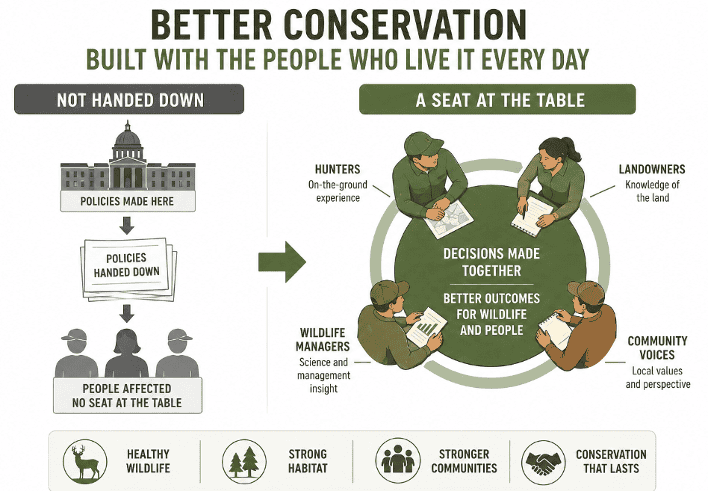
At its core, the difference between HCR 4 and SCR 24 comes down to how wildlife management is handled. SCR 24 builds a system around strict rules and automatic triggers. When certain numbers are hit, restrictions follow, whether conditions on the ground match or not.
HCR 4 takes a different approach. It slows things down, creates space to review what is working, and brings hunters back into the process. One model pushes forward based on numbers. The other pauses to take a closer look before making the next move.
What Comes Next
Getting through committee is a strong step, but this is not finished yet. The resolution still has to move through the full House, where different priorities and viewpoints will come into play.
At the same time, SCR 24 is still in the background. That path would lock in long-term restrictions tied to thresholds and multi-year requirements, making it harder to adjust once those rules are set.
What happens next comes down to engagement. Hunters, landowners, and the people who manage this land every day will decide how this plays out by staying involved and making their voices heard.
Call your legislator. Tell them to support HCR 4. Stand with Hunter Nation and protect your hunting rights, your land, and your way of life.