

The Conservation Funding Crisis: How Fewer Hunters Threatens Wildlife Management
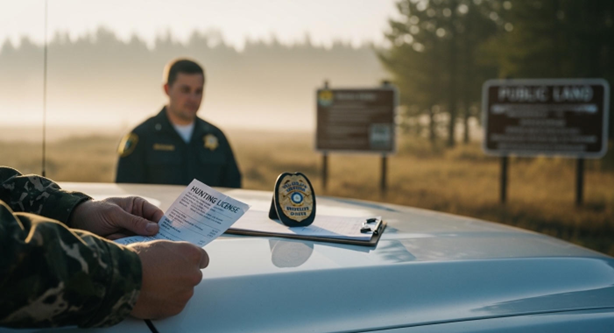
The “user-pay” model that built American conservation is cracking under the weight of declining participation, but a hidden funding nuance offers a glimmer of hope.
The Engine of Conservation
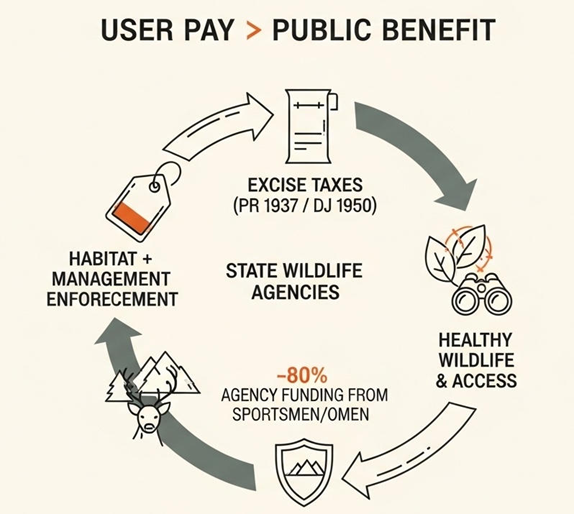
The United States operates on the “American System of Conservation Funding,” a “user pay–public benefit” model. The backbone of this system is the revenue generated from hunting and fishing license sales and federal excise taxes on equipment.

“It’s going to be the responsibility of everybody here in the state to look at, how do we ultimately fund conservation efforts going forward.”
— Eric Lobner, Division Administrator, Wisconsin DNR Fish, Wildlife, and Parks Division
The Congressional Sportsmen’s Foundation states that sportsmen and women provide approximately 80% of the funding for most state fish and wildlife agencies. This money pays for biologists, habitat restoration, game wardens, and public land access. When participation drops, that revenue shrinks, straining the budgets that keep our wild places healthy.
The Pittman-Robertson Lifeline
The heavy lifting of conservation funding comes from the Pittman-Robertson (PR) Act of 1937, which places an excise tax on firearms, ammunition, and archery equipment. U.S. Fish and Wildlife Service records show that in 2023 alone, the total PR apportionment to states and territories was $1.2 billion.
However, the connection between this funding and active hunters is shifting. Today, a significant portion of that revenue comes from recreational shooters who may never buy a hunting license.
The Funding Nuance
Here is the statistic that reveals both risk and opportunity: Wildlife Management Institute reports that 74% of taxed guns and ammunition are not purchased for hunting.
While hunters originally championed this tax, the modern funding engine is increasingly fueled by recreational shooters, handgun owners, and target archers. We are reliant on a broader firearms community that supports conservation financially but does not yet participate in the harvest. This disconnect creates a vulnerability—but also a massive recruitment pool.
Ecological Consequences
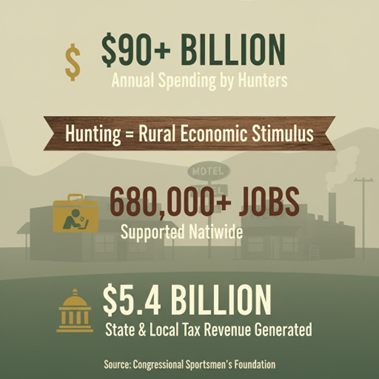
This demographic shift doesn’t just show up in agency budgets. It hits the rural economy where hunting season still functions like a local stimulus. The Congressional Sportsmen’s Foundation reports that hunters spend over $90 billion annually, supporting more than 680,000 jobs and generating $5.4 billion in state and local taxes. In small towns, that spending keeps diners busy, motels booked, and processors running. Fewer hunters means fewer dollars circulating through communities that already operate on thin margins.
There’s also a hard replacement-cost problem. If we lose the volunteer workforce hunters represent, wildlife management shifts from a participant-funded system to a taxpayer liability. Maryland DNR notes that regulated hunting is a primary, low-cost method of controlling populations. Replacing that field pressure with state-funded sharpshooters or contraception programs can cost millions, while also losing the meat harvest that families rely on. In other words, we trade a system where participants pay to steward the land for one where the public pays to mitigate the consequences of overpopulation.
What Hunters Can Do Next
Buy the license even if you don’t fill a tag this year, because that purchase supports the system that funds wildlife management. Then connect the dots at your local range by reminding recreational shooters that their ammo purchases already support conservation and that they can become part of the field side of that equation, too. Conservation isn’t funded by good intentions; it’s funded by participation, and every license bought and every new hunter brought into the field strengthens the “user pay–public benefit” system that keeps wildlife agencies staffed and habitat work moving. The opportunity now is to turn financial supporters of conservation into active stakeholders by building a real bridge from the range to the field.